
Article Library
NEW Silence
by Llewellyn Vaughan-Lee, April 2026
Silence takes the mystic far beyond the mind and its endless chatter, into the deeper dimensions of being that are found within the heart and soul. Read More
NEW AI and Spiritual Life: A Simple Reflection
by Llewellyn Vaughan-Lee, February 2026
First published in Kosmos
Do AI and spiritual growth really intersect, or is this another illusion distracting us from inner life and real change? Read More
NEW Vast Emptiness
by Llewellyn Vaughan-Lee, September 2025
Published in German by AdvaitaJournal
In these my later years I find myself immersed more and more in a vast emptiness in which there is no journey, and even the dharma is lost. Read More

Life Amidst the Ruins: Stories for a Living Future
by Llewellyn Vaughan-Lee, April 2022
I would like to tell a story about the end of the world. Not the end of the world as we know it, a world of supermarkets and cars, of airplane travel and pizzas. But the end of a light that has sustained humanity for millennia… Read More

Watching River Otters
by Llewellyn Vaughan-Lee, February 2022
First published by Kosmos
Walking in the wetlands I encounter a family of river otters playing in the water, then sliding their sleek bodies onto the land, they tumble over each other in the sand, as a blue heron watches nearby. In their primal world there is neither truth nor falsehood, just life present, unfractured. Once, long ago, we walked in this landscape, were part of this ecology of place... Read More
A Story of Beginnings: Memories of Magic and Wonder
by Llewellyn Vaughan-Lee, November 2021
What are the seeds we need for a new story to come fully alive? Returning to a deep ecology of consciousness we can rediscover the magical awareness that belongs to our essential relationship with the living Earth. Read More
A Letter to My Granddaughter
by Llewellyn Vaughan-Lee, March 2021
First published by Dumbo Feather magazine in Australia
What is the world into which you are walking, and what is the landscape you will pass on to your children and grandchildren? Will it be alive with the truth of the Earth or the false promises of technology, the distortions of social media? What are the stories that will guide you, the communities that will support you? Read More
Fire Season
by Llewellyn Vaughan-Lee, August 2021
First published by Parabola
We waited through the Winter of the pandemic, wearing masks, hiding from our darker fears. And then Spring came—apple blossom pink, pear blossom white. The wisteria falling lavender-blue over the garden shed, and then the jasmine, a wall of bright white, filling the evening air with sweetness. Here was another story, each year returning, and longed for as the garden comes alive with colors and fragrance… Read More
Blood Moon In Early Summer
by Llewellyn Vaughan-Lee, June 2021
First published by Resilience
Sometimes at night when sleep escapes me I walk along the road beside the bay. The cars are long gone, and there is only the sound of the wind and the egrets squawking in the nearby wetlands. Early this morning I encountered a family of deer watching me in the long grass, before they vanished into the silence. Then I found the blood moon eclipsed through the trees, an elemental mystery that reaches deep into our ancestral memories, before our consciousness was obscured by science and reason. Read More
The Natural Order Of Things
by Llewellyn Vaughan-Lee, July 2020
First published in Parabola
The present pandemic, which in a few short months has wreaked havoc across our world, is most likely caused by an imbalance in the natural world, as loss of habitat and biodiversity is not only driving animals to extinction but directly causing animal viruses to spread to humans. In response our leaders are using the images of conflict: “We are at war with Covid 19,” we keep hearing; it is an “invisible enemy” we need to “vanquish.” But although this virus is disrupting our lives, causing sickness, death, and economic breakdown, it is itself a completely natural phenomenon, a living thing reproducing itself in the way nature intended. Are these images of conflict and conquest appropriate or even helpful? Do they help us to understand and to respond, to bring our world back into balance? Read More
When The Source Ran Free: A Story For The Present Time
by Llewellyn Vaughan-Lee, May 2020
First published in Parabola
Watching the sun rise over the wetlands, the mist fading, even here in the midst of nature there is the strange stillness of a world in lockdown—waiting, wondering, anxiety, and fear its companions. I am writing these words in the time of the great pandemic, when for a few brief months our world slowed down and almost stopped; when as the stillness grew around us there was a moment to hear another song, not one of cars and commerce, but belonging to the seed of a future our hearts need to hear. Read More

Living the Moment of Love
by Llewellyn Vaughan-Lee February 2019
First published in Parabola
“With an open heart we can see and sense the sacred nature of all of life.”
A simple and essential spiritual truth teaches that only being awake in the moment is real. Only then can the strawberry be tasted in its full sweetness, the plum blossom be seen in its fragile beauty, without memory or preconception. This is the Zen moment of satori, when we are fully present in the experience, in life, as it is. It is a moment “in and out of time,” which we usually glimpse only for an instant before the thoughts and the patterns of our consciousness cloud over our eyes. Read More
Including the Earth in Our Prayers: Spiritual Practice as a Catalyst for Change
by Llewellyn Vaughan-Lee, October 2019
First published in Kosmos Journal
We are living in a time of fundamental change, a period of increasing divisiveness, tribalism, isolationism, even as a global consciousness of oneness struggles to be born. Surrounded by accelerating ecological devastation, climate change, loss of species, many of us—and especially young people—are awakening to the need to respond, to care for climate justice and the living Earth—to embrace life’s interdependent unity, the web of life that supports us all. Read More

Colliding Forces
By Llewellyn Vaughan-Lee, April 2019
Chapter 3 from Including the Earth in Our Prayers: A Global Dimension to Spiritual Practice
Collectively we are walking along a fault line. There are vast pressures building up under our feet, primal powers in the depths which have been moving for centuries. We feel tensions in the air around us, the threat to the ecosystem, the conflicts of terrorism. But within the ground, greater forces are building, forces that belong to the future and not the present. Mostly we walk unknowingly, sensing something but having little knowledge of these vaster forces that are shaping our collective destiny. Read More
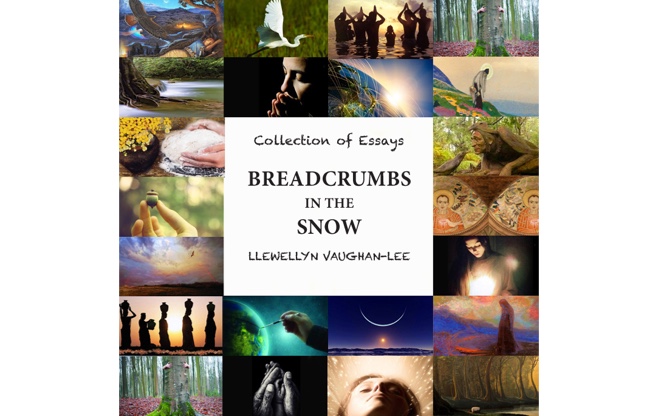
Breadcrumbs in the Snow: A Collection of Articles
by Llewellyn Vaughan-Lee, February 2019
First published by Huffington Post
These articles, written from 2010 until 2017 for the Huffington Post, and gathered together here as a small booklet, were a small response to a collective forgetfulness—a trail of breadcrumbs hoping to attract the attention of those seeking real nourishment, needing to find their way back to their soul and the real ground of being. Read More

A Time for Silence
By Llewellyn Vaughan-Lee, November 2017
Published in Garrison Institute
For our ancestors the rhythms of the seasons were their calendar, the rising and setting of the sun their only clock. Today our clocks seem to spin much faster and it is easy to ignore—or even forget—these more primal seasons and their meaning. And yet as our world appears to spin more and more out of balance—temperatures and sea levels rising, species depleted—there is a pressing need to return to a deeper rhythm, to the cycles that belong to healing and transformation, to the seasons of the Earth and the seasons of the soul. Read More
Unity and the Power of Love
by Llewellyn Vaughan-Lee September 2018
First published in Kosmos Journal
Unity holds the essential vision that we are one living, interconnected ecosystem—a living Earth that supports and nourishes all of its inhabitants. If we acknowledge and honor this simple reality, we can begin to participate in the vital work of healing our fractured and divisive world and embrace a consciousness of oneness that is our human heritage. This is the opportunity that is being offered to us, even as its dark twin is constellating the dynamics of nationalism, tribalism, isolationism, and all the other regressive forces that express ‘me’ rather than ‘we.’ Read More
Changing the Story
by Llewellyn Vaughan-Lee, August 2018
Published online on Garrison Institute
"The only way to change the world is to change the story.” We know only too well the story that defines our world today. It is a tale of consumerism and greed, sustained by the empty but enticing promise of an endless stream of “stuff” as the source of our happiness and wellbeing. Read More
Walking
by Llewellyn Vaughan-Lee and Hilary Hart, April 2018
First published in Heartfulness Magazine
In the busy-ness of our contemporary life, we are drawn into ceaseless activity that often separates us from the deeper dimension of ourselves. With our smartphones and computer screens, we often remain caught on the surface of our lives amidst the noise and chatter that continually distract us, that stops us from being rooted in our true nature. Unaware we are drowned deeper and deeper in a culture of soulless materialism. Read More
A Lover’s Journey: A Story of the Sacred Feminine
by Llewellyn Vaughan-Lee, March 2018
First published in the blog the feminine and the seeds of the future
When I was nineteen I met my teacher, a Russian-born woman in her mid-sixties, recently returned from India where she had been trained by a Sufi master. Four years later, sitting in her small meditation group, I met and fell in love with a young woman recently arrived to London from Israel, who was to become my wife. As an intense young man, focused on meditation and aspiring to realize a formless Truth, the Sufi path unexpectedly opened me to the mystery of the feminine, and to the wonder of love both human and divine, formless and tangible. Read More
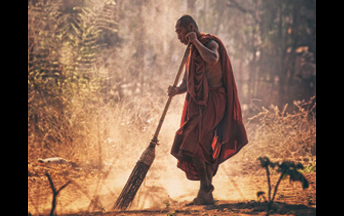
Spiritual Ecology: the Art of Cleaning
By Llewellyn Vaughan-Lee, May 2017
Adapted from Spiritual Ecology: 10 Practices to Reawaken the Sacred in Everyday Life.
In the busyness of our contemporary life we are drawn into ceaseless activity that often separates us from the deeper dimension of our self. Read More
Mystics and Scientists – The Convergence of Science and Spirituality
by Llewellyn Vaughan-Lee, March 2015
Transcript of talk by Llewellyn Vaughan-Lee
From the Gathering: Technology, Consciousness & the Future, March 27–28, 2015 – Half Moon Bay, CA
Read More
Returning to a Place of Belonging: An Interview with Sufi mystic Llewellyn Vaughan-Lee
By Sam Mowe, May 2017
Published in Garrison Institute
When you pay attention to what’s happening to the world—the destruction of our air, soil, and water—it is common to want to do something to help the situation. But what if part of the reason that we’re in this perilous ecological situation is our tendency to treat the world as if it’s a problem to be solved? Read More
The Loss of the Sacred and a Prayer for the Earth
by Llewellyn Vaughan-Lee, September 2016
First published in Kosmos Journal
The sacred is all around us, woven with stories and starlight, in the rich texture of the soil, and in certain dreams that come on certain nights. Read More
Love: Life’s Greatest Gift
By Llewellyn Vaughan-Lee, February 2017
First published in Common Ground
All of us want, or need, to be loved. The need for love is one of the most basic human impulses. Read More
Civilization On the Cusp
by Anne Baring
This essay, under the name “Who are we and why are we here?”, was originally published in A New Renaissance: Transforming Science, Spirit, and Society (Floris Books, 2011), edited by David Lorimer and Oliver Robinson, © 2010 Scientific and Medical Network. It has been reprinted and abridged with permission of the publisher. Read More
A Calling to Remember: A Vision About the Earth
by Anat Vaughan-Lee, August 2012
I woke up with the sound of bells ringing. It sounded and felt like a massive sound, as if bells were ringing from every top of every mountain, but mounting to ONE sound from a huge bell. The sound contained within it an unmistaken phrase: PLEASE REMEMBER! Read More
The Magic of Creation: The Sufi’s Way
by Llewellyn Vaughan-Lee, February 2016
First published in Sutra Journal
One of the central teachings of Sufism is that God is both transcendent and immanent. Our Beloved is “beyond even our idea of the beyond,” and also “nearer to you than yourself to yourself." Read More
The Journey Towards Oneness: A Conversation with a Scientist and a Mystic
Interview with Ravi Ravindra and Llewellyn Vaughan-Lee, August 2016
Published in Light of Consciousness Journal
In this interview by Global Spirit, host Phil Cousineau brings together physicist Dr. Ravi Ravindra and Naqshbandi Sufi teacher Llewellyn Vaughan-Lee in an exploration of the concept of Oneness—tracing its evolution and expression through the deep undercurrent of teachings that point in the direction of the indivisible totality of all creation, all beliefs, all religions, and of the universe itself. Read More
Meaning and the Song of the Soul
by Llewellyn Vaughan-Lee, February 2016
First published in Excellence Reporter
Meaning is what calls from the depths of the soul. It is the song that sings us into life. Whether we have a meaningful life depends upon whether we can hear this song, this primal music of the sacred. Read More
Spiritual Principles in Action: A Story for a Younger Generation
by Llewellyn Vaughan-Lee, December 2015
First published in Dust Magazine
In answer to a question from a 31-year-old person, “What advice do you have for people my age in dealing with a world that tells us we are nothing but material mechanisms, and has almost no concept of the soul?” Read More
Shifting the Climate Debate Onto Sacred Ground
by Llewellyn Vaughan-Lee, July 2015
First published on The Huffington Post
"The ecological crisis is essentially a spiritual problem." These words spoken by an Eastern Orthodox theologian, Metropolitan John Zizioulas, at the Vatican news conference on the papal encyclical are profoundly important. Read More